
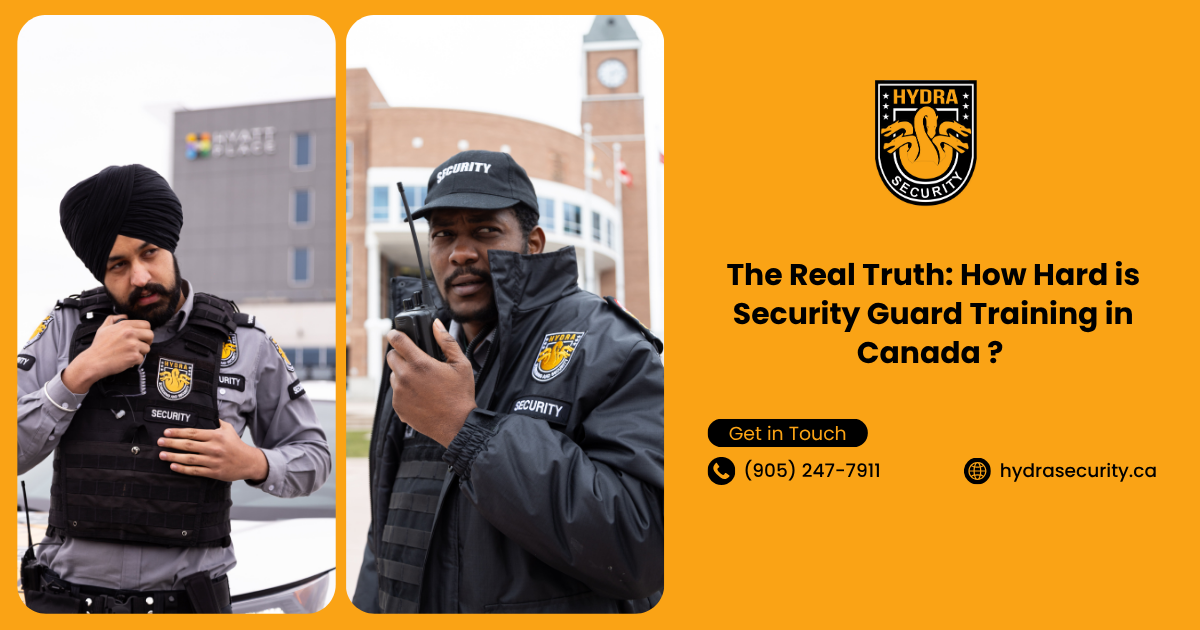

Wondering what it takes to be a security guard in Canada? Maybe you have seen those Uniformed security guards keeping an eye on the mall or some large event and thought, “Hey, that could be me”. There is nothing so far-fetched about it. Either you are thinking of joining an agency in the area of Security in Toronto, or just want the insider story. Let’s chat about what this training is really like-no fluff, just the real deal. There’s this old line from Plato that goes, “We are twice armed if we fight with faith.” For security guards, that faith comes from knowing your stuff, training that preps you for whatever’s around the corner. If you’re thinking about Hydra security Careers or just testing the waters, stick with me. We’ll walk through what Basic security guard training in Canada actually involves.
Exploring Hydra Security Careers and Guard Training in Canada
Security jobs are popping up everywhere in Canada-malls, offices, even quiet neighbourhoods need people to keep things safe. Companies like Hydra Security are a solid starting point, offering roles in all kinds of settings. But first, you’ve got to tackle Basic security guard training. It’s the ticket to getting your license, especially if you’re in Ontario.
The folks at the Ontario Ministry of the Solicitor General set the rules here. They want you to learn the law, handle emergencies, and act like a pro, not just stand there looking intimidating. So, how tough is it? Let’s dig into that next.
How Challenging Is Security Guard Training?
Look, whether the training feels hard or not depends a lot on you. If you’re quick to learn or don’t freak out when things get hectic, you might breeze through. But if studying isn’t your thing or stress throws you off, it could take some effort. Either way, it’s not impossible, especially since a lot of its online now, so you can go at your own speed.
It’s 40 hours total: 33.5 hours on security basics and 6.5 hours on first aid and CPR. That’s per the Private Security and Investigative Services Act (PSISA). It’s a decent time commitment, but it’s split up nicely. Just keep your head in the game, because there’s a bunch to cover.
What Makes Basic Security Guard Training Difficult?
This isn’t just about cramming facts-it’s about getting the right mindset. You’ve got to stay sharp, care about people, and think fast. Here’s where it can get tricky:
- Learning Legal Regulations and Standards
The legal stuff can be a bit of a headache. You’re diving into the Criminal Code, the Ontario Evidence Act, and the PSISA laws that spell out what you can do on the job, like detaining someone or using force (only if you really have to). At first, it feels like you are drowning in rules, but you don’t need to memorize everything-just get the key bits that matter.
- Emergency Response Scenarios and Judgment Calls
Say an alarm’s blaring or someone’s causing a scene. You’ve got to figure out what to do, fast, and keep everyone safe. Training throws you into practice runs, role-playing that can feel intense if you’re new to it. You’ll learn to talk to people down, patch up injuries, or even do CPR. It’s all about keeping your cool when it counts.
- Professional Conduct and Ethical Responsibility
Being a guard isn’t just showing up-it’s about being legit. You’ll figure out how to talk to people, stay respectful, and make smart calls. That’s tough if you’re not used to juggling different personalities or sticky situations. But it’s a big deal, especially with a Security agency in Toronto, where trust is everything.

Key Challenges:
- Wrapping your head around legal jargon and when it applies.
- Picking up practical skills like first aid or calming folks down.
- Keeping your eyes peeled for anything off.
Physical Requirements for Uniformed Security Guards in Ontario
You don’t need to be jacked to do this job, but you’ve got to be fit enough. You might be walking a huge property for hours or need to hustle if trouble starts. It’s not a marathon, but you can’t be out of breath five minutes in. Some gigs, like retail or events, might mean stepping in physically, though talking usually works better than tussling.
The training itself isn’t a fitness boot camp, but it covers staying safe and knowing when force is okay. Plus, if you’re eyeing mobile patrol work, a G or G2 driver’s license might come in handy.
Passing Security Guard Exams in Canada
- What the Certification Process Looks Like
To make it official in Ontario, you’ve got a 60-question multiple-choice exam with a waiting score of at least 62% and you’re golden. It tests if you’ve got the security basics, legal know-how, and emergency skills down. Plus, first aid and CPR come with hands-on checks to prove you can handle the real thing.
- Written Exams vs. Practical Assessments
The written part might spook you if tests aren’t your jam, but there are practice questions and guides to ease you in. It’s not a gotcha; they just want you prepared. The practical stuff matters too, showing you can use what you’ve learned when it’s go-time.
- Ontario-Specific Licensing Process
Pass the exam, and you’ll get a Testing Citation Number (TCN) to grab your license via ServiceOntario. You’ll need:
- A decent passport-style photo.
- Two government IDs (no health cards, sorry).
- A clean criminal record check.
It’s simple if you don’t mess up the details. Apply online, and you’ll even get a digital license while the real one’s in the mail.
Final Thoughts:
So, how hard is security guard training in Canada? It’s not a cakewalk, but it’s not rocket science either. Put in the work, soak up the lessons, and you’ll come out ready for a job that’s tough but worth it. From nailing the legal stuff to handling emergencies, every bit you learn makes you better.
Ready to jump in? Look into Hydra Security Careers– we havegot the training and experience to turn you into one of Ontario’s Uniformed security guards. It’s a gig that’s demanding but pays off big if you’re up for making a difference.
No responses yet